Supporting CIM Extension
CIM is still evolving. Almost every CIM-related project requires standard CIM to be extended to meet special project requirements. The Tool, as a model-driven application, provides native support for CIM extension.
Many of functional modules in the Tool are generic data-driven applications. For example, users can load any versions of CIM/XML, standard or extended, for browsing. The Tool will create various navigation trees and displays based on the data characteristics. Others include model comparison, model merging, incremental update etc. These functional modules are CIM-agnostic, thus working for any versions of CIM/XML files containing extensions.
On the other hand, some of the functional modules of the Tool are CIM-aware. For example, validation must be guided by a model schema specification, so is the model partition function. The model schema specification, however, is not hard-coded in the Tool. Instead they are separated from software implementation and stored as a metadata file, i.e. XSD-based profile document. Basically, an XSD-based model schema specification is created for each version of profile. It includes all of the meta-knowledge about the specified model, including modeling restrictions and validation rules. In order to support the extended CIM, the governing profile must be modified.
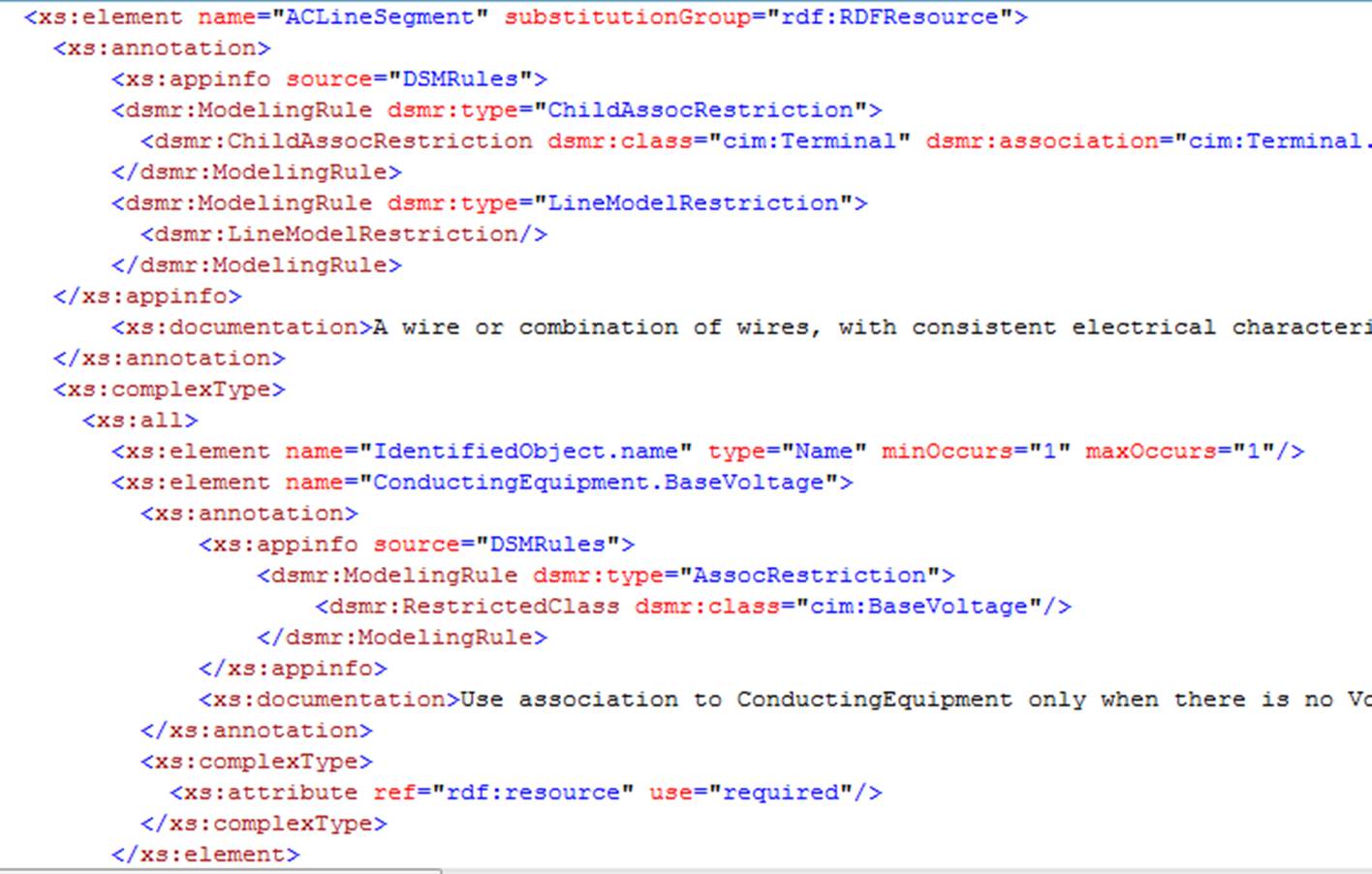
The following provides some general guidelines on how to extend these XSD meta-files in support of CIM extension.
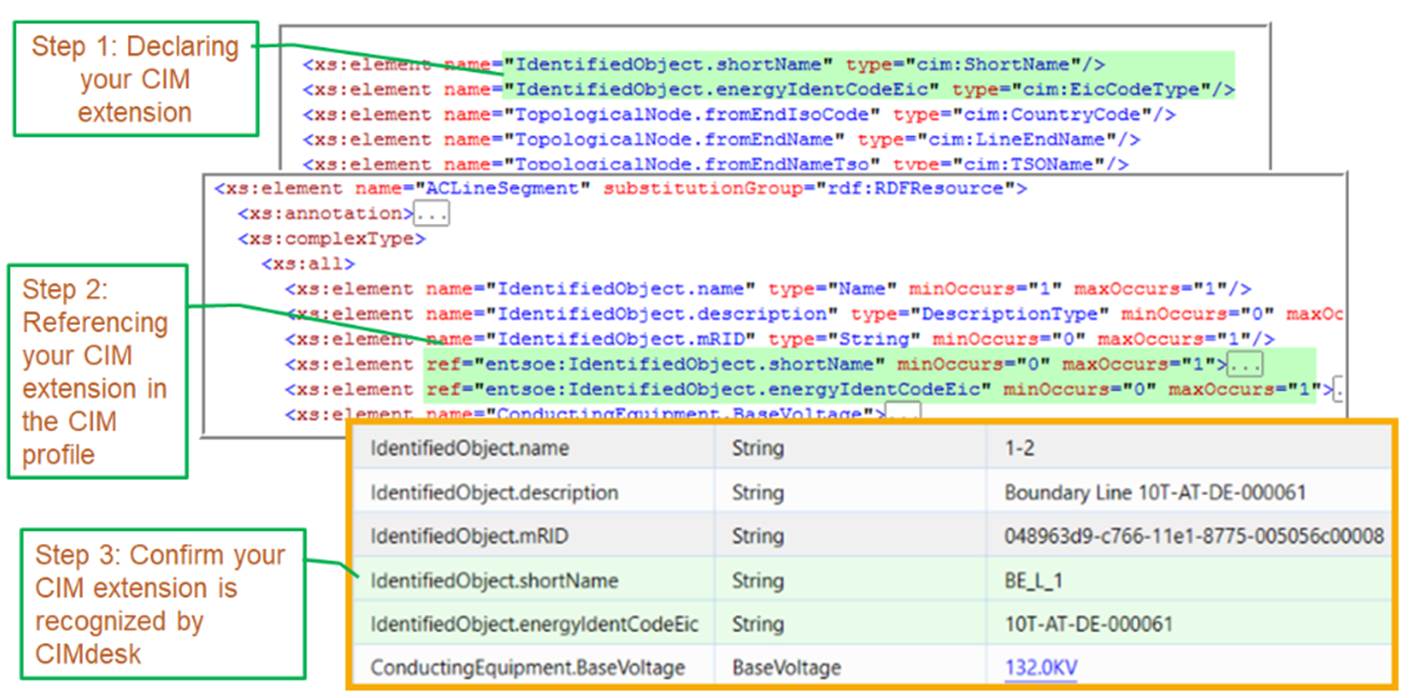
Note: The feature is included in the standard release, but not under the standard technical support. Special technical support is available on a case-by-case basis.