Model Editing

The Tool provides full support for model editing. Users can make arbitrary model changes using object-based data editor. To help users perform the most tedious yet the most important modeling task, network topology modeling, the Tool also provides a graphical modeling application called graphical model editor, enabling users to interactively and intuitively build and maintain the network model in a What-You-See-Is-What-You-Get (WYSIWYG) style. Additionally, it provides some advanced features, enabling users to rapidly perform the model maintenance work by using the existing modeling entities as templates During the model editing, the Tool automatically maintains the model referential integrity and tracks model changes, which can be exported as a CIM incremental/difference file.
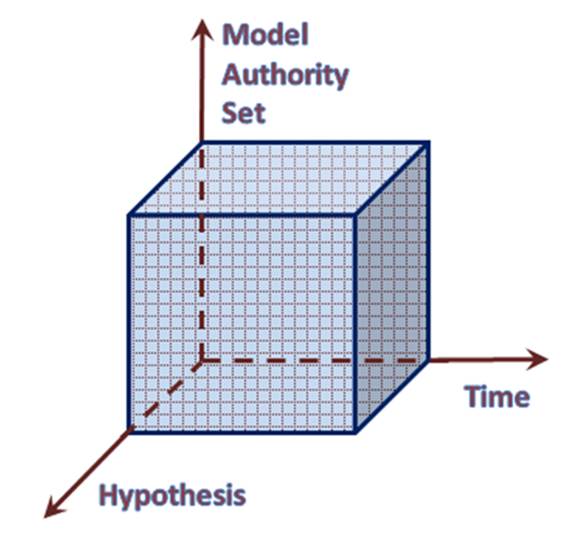
While model editing function is applicable for any full models loaded from any sources, this function typically shall work together with the Model Management function to facilitate model maintenance and administration. Unlike traditional modeling tools that could model only a snapshot of power system operations, the Tool will evolve to provide a multi-dimension modeling space in support of power system planning. It supports time-based modeling and enables a model to evolve through time. The model management feature allows users to branch, revision, and merge models to fit various business needs.
Single Entry Modeling
One of the ultimatum design goals of the Tool is supporting CIM-based single-entry modeling and centralized information management. Under this methodology, a modeling entry should be entered once, and then will be available for all of the downstream applications and information systems. This is particularly useful for building or maintaining a region-wide power system model. By leveraging a single-entry modeling system, grid coordinating organization simply defines the model boundary sets and then let each member utility or model authority build and maintain the model within their service territories. The single-entry modeling tool will provide sophisticated but customizable work flow process to automate the model management. Users could draft the model changes, build a study case, run the validation, and finally submit the model changes. This centralized single-entry modeling will fundamentally eliminate the necessity of the traditional model merging processes.
Overview of Model Editing
The Tool provides the following functions to support model editing:
- Full support for model editing: Users can make arbitrary model changes, including deep copying and cascading deletion.
- Model change tracking: During model editing, any model changes will be tracked and can be exported as a CIM incremental/difference file.
- Template-based modeling: significantly facilitating model maintenance by using the existing substation/equipment as templates.
- Graphical model editing: enables users to interactively and intuitively build and maintain the network model in a what-you-see-is-what-you-get style.
Overview of Subtopics
- Object-based Data Editing
- Model Editing Mode
- Editing Objects
- Adding Objects
- Deleting Objects
- Copying Objects
- Restricting Modeling Operations
- Data Entry Validation
- MVVM Support
- Graphical Model Editing
- Setting up Graphical Modeling Environment
- Understanding Graphical Modeling Entity
- Adding a Modeling Entity
- Adding a ConnectivityNode
- Adding a Substation
- Adding and Connecting an Equipment
- Deleting a Modeling Entity
- Editing a Modeling Entity
- Reconnecting Network Components
- Template-Based Modeling
- Enforcing Modeling Constraints
- Bulk Model Editing
- Bulk Model Processing
- Tracking Model Changes